> For the complete documentation index, see [llms.txt](https://docs.findable.au/llms.txt). Markdown versions of documentation pages are available by appending `.md` to page URLs; this page is available as [Markdown](https://docs.findable.au/create-pseo-pages/page-design/designing-with-multi-reference-fields.md).
# Designing with Multi-reference Fields
Reference fields allow you to bring information from one CMS collection into another.
{% hint style="info" %}
If your collection items don’t include reference fields, make sure you’ve set them up correctly. See [Creating Reference and Multi-Reference fields](/create-pseo-pages/connecting-webflow/creating-reference-and-multi-reference-fields.md) for more information.
{% endhint %}
In Webflow, there are two types of reference fields:
* Single reference fields
* Multi-reference fields
Multi-reference fields are configured to link multiple items from another collection. For example, if a product falls within several categories defined in another CMS collection, you can select all of the applicable categories that apply to the item.
Multi-reference fields are easy to configure in the collection but require a few more steps in design.
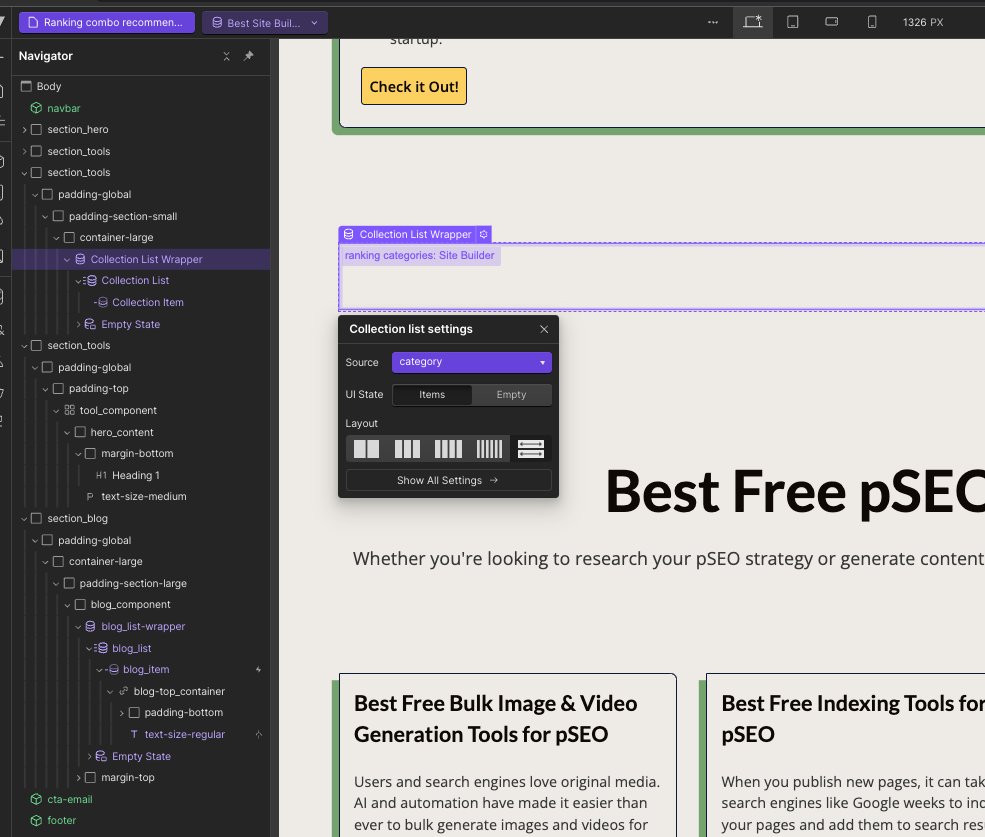
Add a new Collection List element to use a multi-reference field on your page.
Select the reference collection from the drop-down list. Ensure you’re selecting the reference collection, not the original one.
Place your element within the collection and style it as you usually would.
Click the settings to add a dynamic reference to the collection.
{% hint style="info" %}
For more information on using multi-reference fields, [check out Webflow's documentation](https://university.webflow.com/lesson/multi-reference-field?topics=cms-dynamic-content).
{% endhint %}